During WW2 the young American soldiers brought great excitement among the so called "delicate" young ladies of Europe. They brought with them a sense of excitement and glamour. As well as silk which was prohibited for civilian use because of the rationing.
Like in WWI women had to adapt to a world without men. They embraced wearing trousers and yet again took on the men's jobs. WWII also meant the start of the Land Girls. Women were working on the farms and driving the tractors a task previously seen as not very glamorous. There were many well known propaganda slogans like "Dig For Victory" and "Make Do And Mend".
Many fashion magazines issued a "One and Only Dress" campaign which is pretty self explanatory. Meaning that one pattern could become 5+ dresses. Women's hair also changed from the slick fashionable curls to wound up in turbans.
In 1942 utility clothing such as overalls and heavy work trousers became mass produced for the women but also for the men who were unable to fight in the trenches.....Dad's Army.
Unrelated to fashion but here is a famous clip from the TV show.
The flag of the resistance
When Germany invaded Poland it also invaded France which meant a resistance. A Resistance Army confused the Germans with cleverly hidden gadgets for their spies. Maps were printed on scarves and handbags were made with an extra compartment.
Over in England the constant bomb threat meant that the city children had to be evacuated to the country for their own safety. City children were known to be very scruffy and ill mannered (with exceptions) compared to the delicate politeness of the country. Not all the fun had vanished however with the American GI's came new dances like the jitterbug and swing. Fast energetic dances that couldn't e dance in the blackout without injuring themselves or anyone else.
In 1945 when everyone heard that the war had ended they rightly went giddy and crazy with relief and happiness. They danced. They partied. They drank. Life was good and the happiness continued into the fifties.
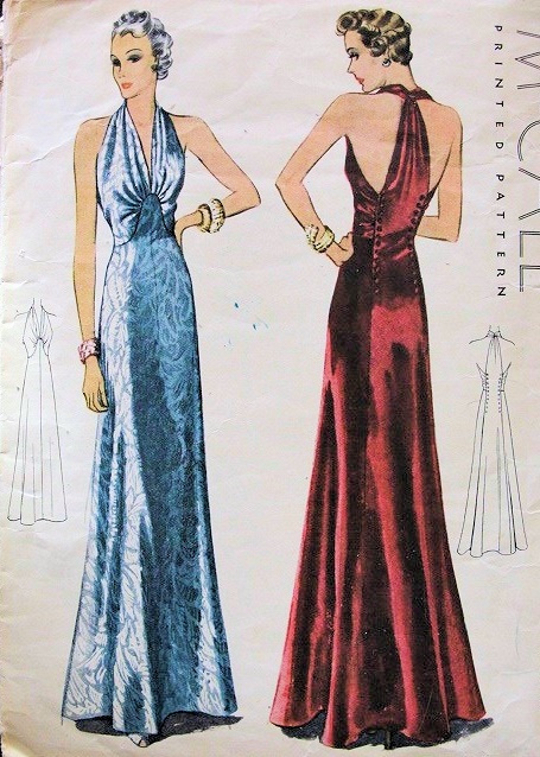
After the roaring decade of the twenties society calmed down a bit. The 1930's became known as the "age of opulence".
There was a huge class difference throughout the elite society.
Clothes went from being flashy and aimed at the adolescents to elegant and sophisticated.
The arrival of Burtons
meant mass produced menswear for the first time.
As couture fashion was primarily aimed at women this was an almost entirely new concept.
The other change was the tomboyish figure going out and curves coming back in.
The cinema was introduced in the late 1920's but became fashionable in about 1932 the end of the great depression when people had the money to actually go.
Silent movies were out, "talkies" were in. As demonstrated in the Oscar winning film " The Artist."
Hollywood made some big films and even bigger stars in the 1930s. Some notable references are the Wizard of Oz which of course made Judy Garland famous.
Clark Gabel and Vivien Leigh stars of the iconic film Gone With the Wind (1939).
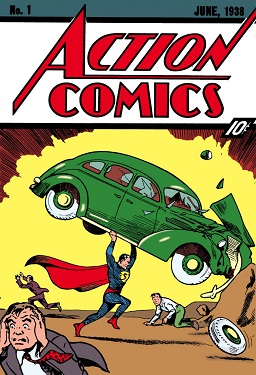
Unrelated to fashion a new fad drew in crowds in the 1930s when two other iconic figures were made. Two heroes like no others.
Superman was created in 1932 and his associate Batman (and Robin) was created in 1939. These creations in turn created the nerd.
In 1936 Britain became known for having 3 Kings (on the throne not the nativity). This was because of the complicated matter of George V dying his first son taking over then abdicating the throne causing his younger brother to take over. Its explained better in this.
Edward VIII's abdictaion was due to this woman, Wallis Simpson was infamous for taking the King away but was also considered a fashion icon in the mid 30's.
Ms. Simpson always made sure she wore the height of fashion and was (nearly) always praised for her taste.
Godets(inverted circle flares) became used in skirts and dresses below the knee as opposed to the twenties where they were below the hips.
Many designers used aspects from different historical eras in particular the Victorians.
Gloves were worn with day and evening dress emphasizing the elegance of the decade.
In 1939 the fashion industry came to a halt as Germany invaded Poland and began WWII which of course meant that for 6 years society had to cope with make do and mend.
In 1921 Chanel No.5 was launched, a perfume I'm sure many are familiar with. This began the launch of designer perfume and Chanel was the first to start the trend.
The iconic bottle designed by Chanel herself has barely changed, unlike many of the designer perfumes it still remains as classy and elegant as when it began.
During the "Roaring Twenties" a huge trend began the cinema. The glamour of many Hollywood stars influenced the young people of the day. Heavy eye make up and dark red lips meant that the "vamp" was born.
Many young girls embraced the vamp look and melted it into the "flapper girl".
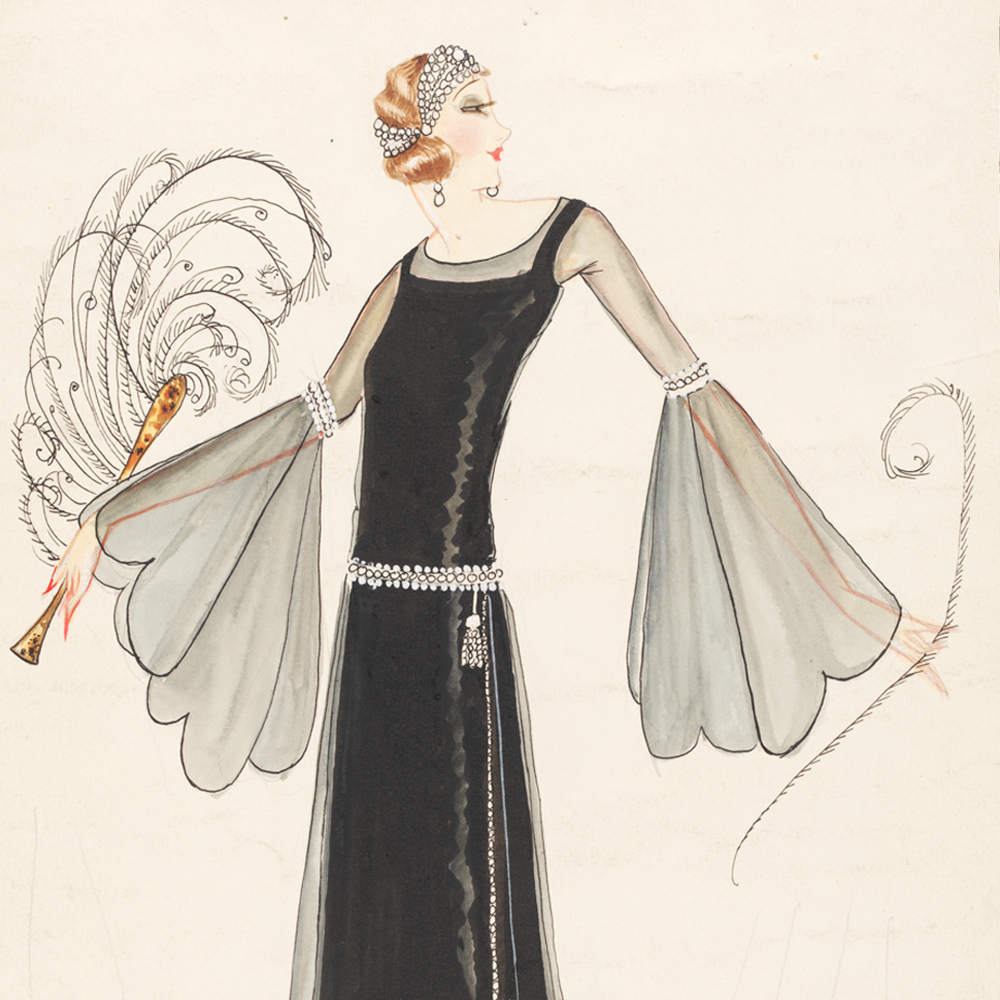
This look enhanced the vamp but wore it with fringed dressses that had high hems but low waists. This almost caused a scandal with the older members of society who had memories of floor length dresses and modest shirts.
For many young people 1920s meant freedom a chance which they had never taken before. Young ladies could go out unchaperoned to dance to another new trend "Jazz music".
As for the young gentlemen, they became suave with sleek hair and dashing tailored suits. They also copied many Hollywood icons such as Clark Gable and Rudolph Valentino whose many different screen personas gave him a very wide fan club.
As many clubs appeared on the streets so did the things to drink in them. Cocktail dresses came into being. These new creations meant bare arms and straight lines that hid any curves.
Simular to the flapper dresses but described as more classy.
The 1920s was also the decade of the Prohibition of alcohol in the US. The idea was that it would put an end to binge drinking and the like, that however went wrong.
People went to illegal bar "speakeasies" where Flappers performed and Jazz musicians "played 'til the fuzz came". This had an indirect influence on fashion as it led in a way to this...
One of the most famous images
of the effects of the
Great Depression
The Great Depression in 1929 meant that the
collective states of America were on a downward trip due to the stock market crashing. This in turn meant that women and men had to ration their clothing (sound familliar? it happened again in about 10 years during a certain war).
Also during the twenties the discovery of King Tutenkamen's tomb meant the outbreak of Egyptian designs and patterns mainly in the use of Art Deco.
Another notable person in the 20s was Norman Hartnell.
He was a fashion designer and was renowned for working alongside the British Royal Family. He designed Queen Elizabeth ll's wedding dress and coronation dress and is also famous for bringing an end to the flapper era by introducing longer length dresses.